
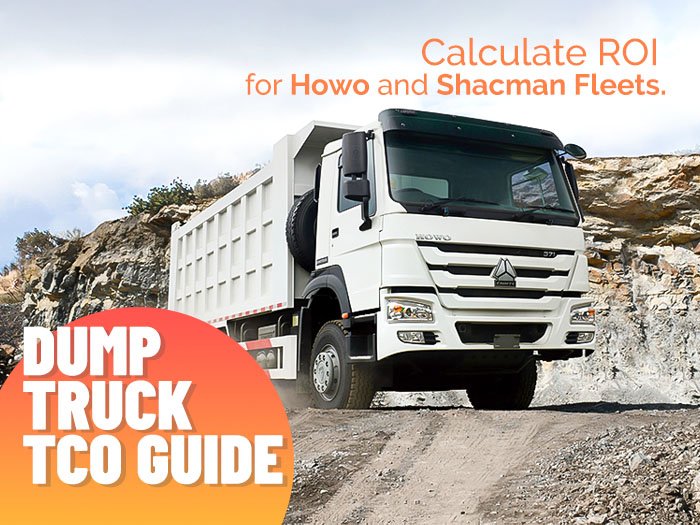
Dump Truck TCO: Howo & Shacman ROI Calculation Guide.
Introduction: The TCO Imperative
The procurement of a heavy-duty dump truck fleet—whether Howo or Shacman—is a multi-million-dollar investment that determines the profitability of your construction, mining, or logistics operations for the next decade. Yet, many fleet managers still make decisions based solely on the Initial Purchase Price (IPP). This approach is fundamentally flawed and short-sighted.
Why Initial Price is the Wrong Metric
Initial Purchase Price (IPP) only accounts for 20-30% of a vehicle’s actual lifetime cost. The remaining 70-80% is locked in operational expenses: fuel, maintenance, downtime, and eventual resale value. Total Cost of Ownership (TCO) is the only true metric for fleet profitability, providing a holistic view of the financial commitment. Ignoring TCO inevitably leads to reduced profit margins and unexpected operational crises.
TCO vs. Short-Term Savings: A Hypothetical Case Study
Imagine saving $5,000 on the IPP by choosing a less robust Howo model over a heavily reinforced Shacman. Over five years, that “cheaper” unit might have:
Higher Fuel Consumption: Costing an extra $15,000 in diesel.
Component Failure: Requiring $10,000 in unscheduled repairs for a prematurely failed axle.
Downtime Penalty: Losing 30 days of work, equating to $25,000 in lost revenue.
In this scenario, $5,000 saved on the front end costs $50,000 in the long run. The TCO mindset is not about buying cheap; it’s about buying smart.
Section 1: Dissecting the TCO Model with Quantification
The calculation of TCO must move beyond guesswork and rely on measurable data and projected expenses.
The TCO Formula Breakdown & Metrics
The comprehensive TCO equation provides the framework for strategic procurement:
TCO = (IPP + OC + MC) - RV
| Variable | Description | Weighting (Approx.) | Key Metrics |
| IPP (Initial Purchase Price) | Cost of truck, taxes, delivery. | 20% – 30% | Price, Financing Rate |
| OC (Operating Costs) | Fuel, tires, oil, labor. | 40% – 50% | L/100km, Tire Life (km/set), $/hour Labor Rate |
| MC (Maintenance Costs) | Parts replacement, scheduled service, unscheduled repairs (downtime). | 20% – 30% | Cost of Axle Replacement, Cost of Downtime |
| RV (Resale Value) | Projected sale price at decommissioning. | Subtracted | Brand Reputation, Maintenance Records |
Operating Costs Deep Dive
Fuel consumption is the single biggest operational cost. Factors influencing L/100km or MPG include engine tuning, truck weight, drive ratio, and topography. Labor efficiency (time spent loading and unloading) also influences daily cycles and, therefore, profitability.
Case Study Table: TCO Comparison: 6x4 vs. 8x4 Over 3 Years
| Metric | 6×4 Tipper (Paved Haul) | 8×4 Tipper (Mine Haul) | Implication for TCO |
| IPP Adjustment | Base Price (Lower reinforcement) | +15% (Heavier chassis, axles) | Higher initial investment for 8×4. |
| Payload/Trip | 25 Tons | 32 Tons | 8×4 handles 28% more material per cycle. |
| Fuel Consumption | 45 L/100km | 60 L/100km | Higher fuel penalty for 8×4 due to weight/off-road use. |
| Tire Life | 80,000 km | 35,000 km | 8×4 requires significantly higher tire budget. |
| Annual Maintenance | Low | High (Due to component stress) | MC variable is crucial for 8×4 TCO. |
Section 2: Configuration Deep Dive: 6x4 vs. 8x4 Application Economics
Choosing the right drive configuration (6×4 or 8×4) is the most immediate factor impacting TCO and compliance.
6x4 TCO Profile: The Highway Specialist
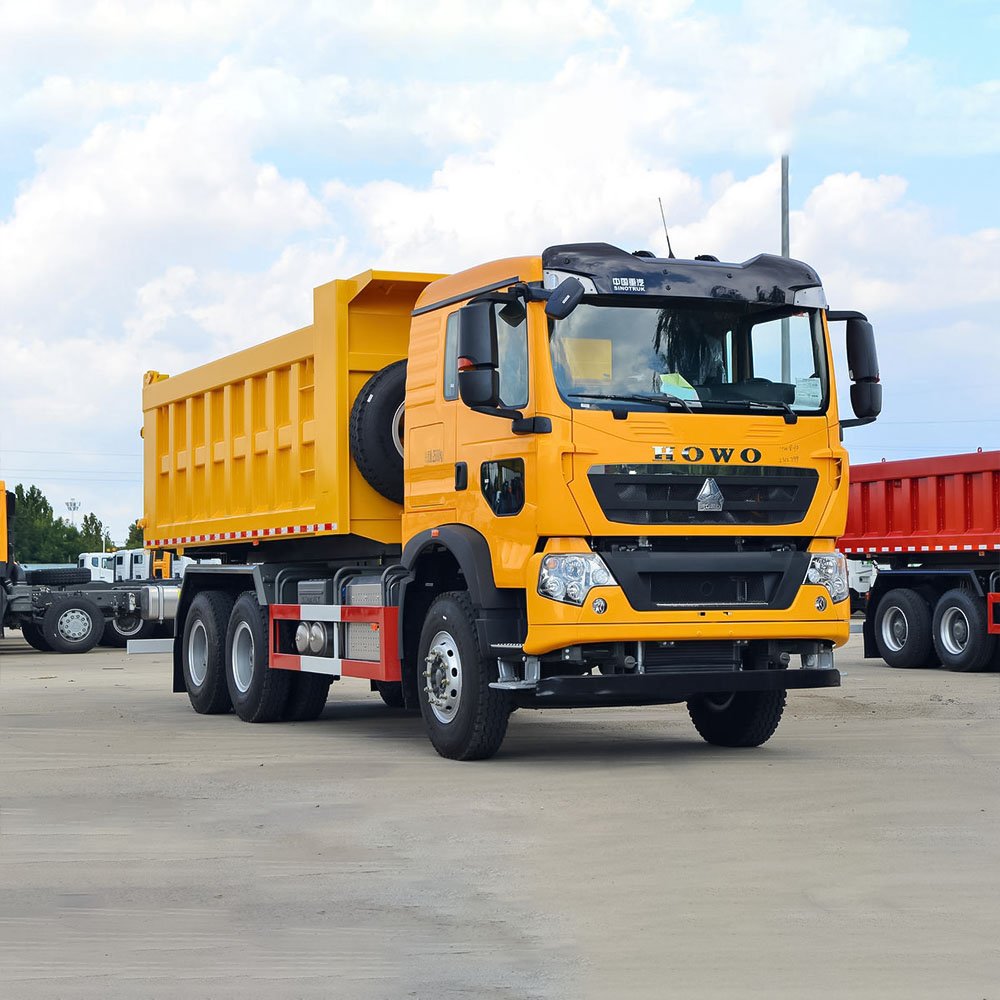
The 6×4 unit (three axles, two driven) is the backbone of regional and long-haul road transport. Its TCO benefits come from:
Optimized Final Drive Ratios: Engineered for high road speed with lower engine RPM, minimizing fuel burn.
Lighter Chassis Weight: Allows for maximum payload within strict road weight limits.
Compliance Risk Management: This compliance is essential for avoiding regulatory fines and safety risks. Refer to the World Bank: Vehicle Overload Control Practices in Sub-Saharan Africa report.
Reduced Tire Wear: Fewer driven axles and smooth terrain dramatically extend tire lifespan.

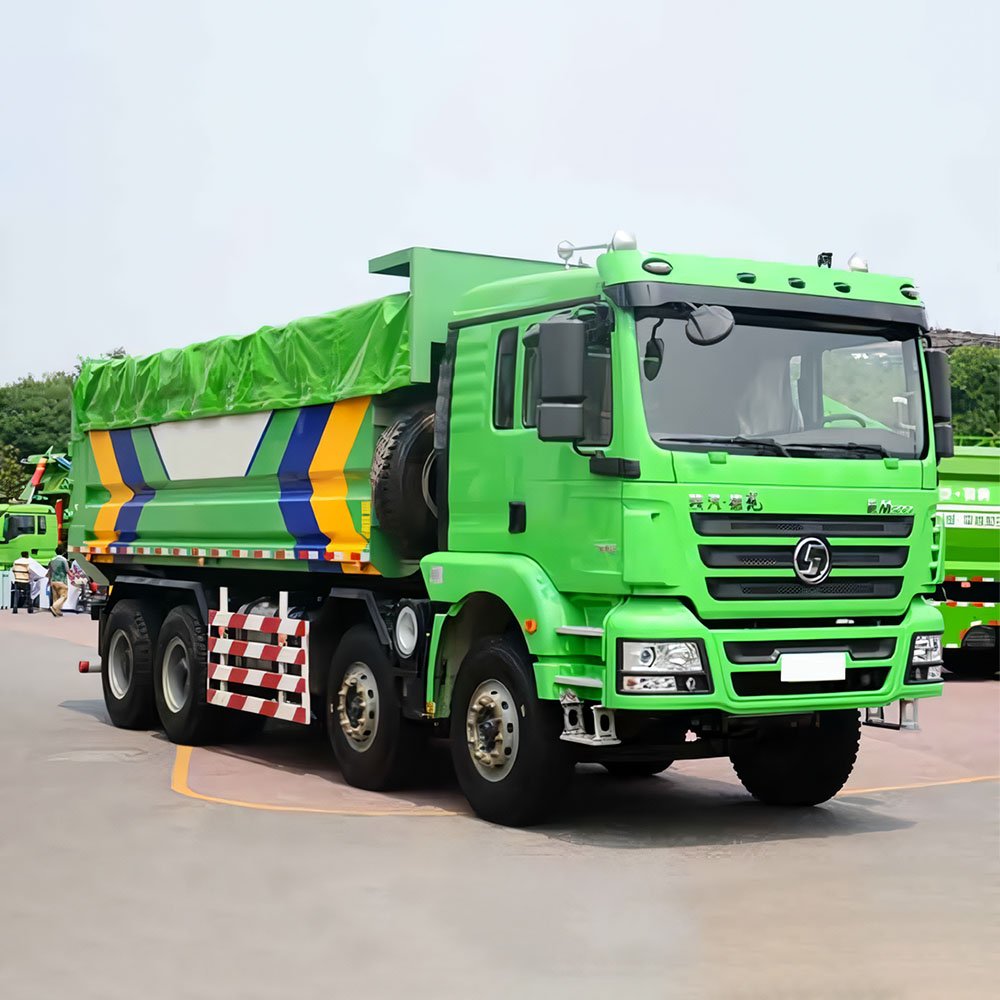
8x4 TCO Profile: The Mining Workhorse
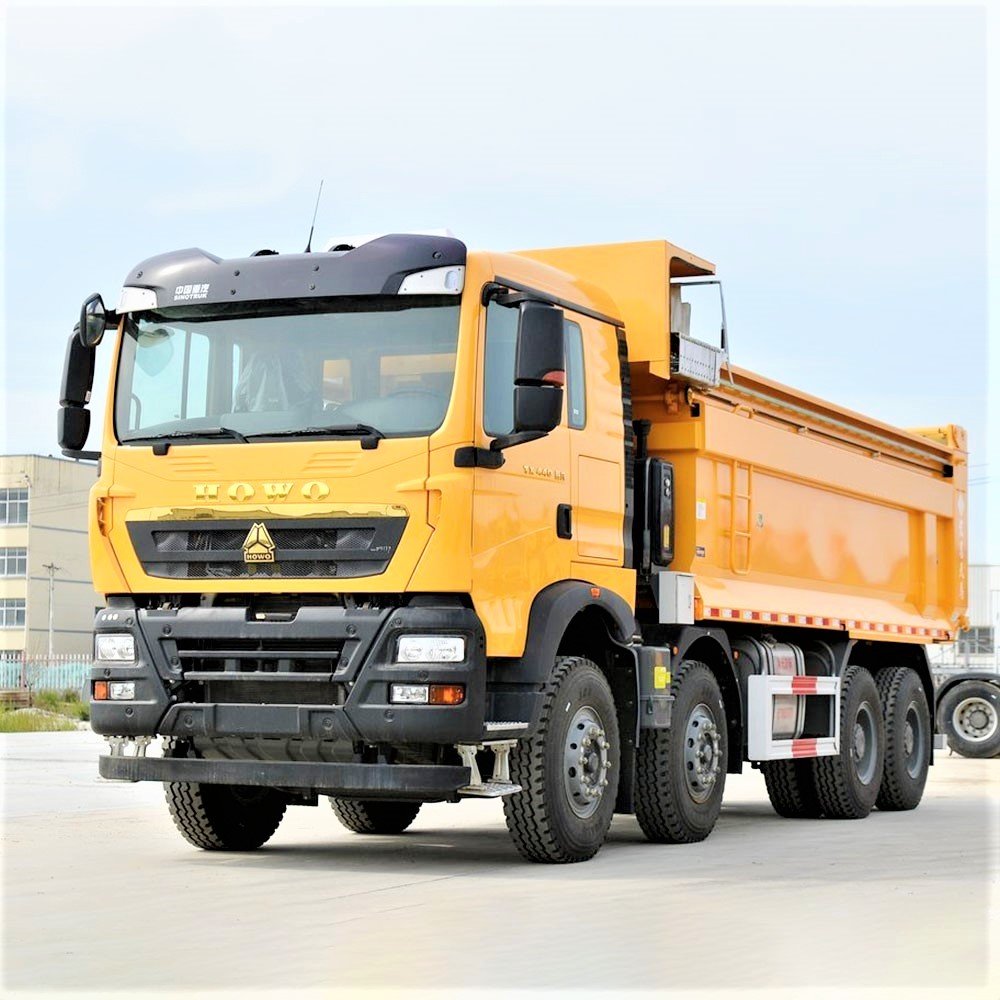
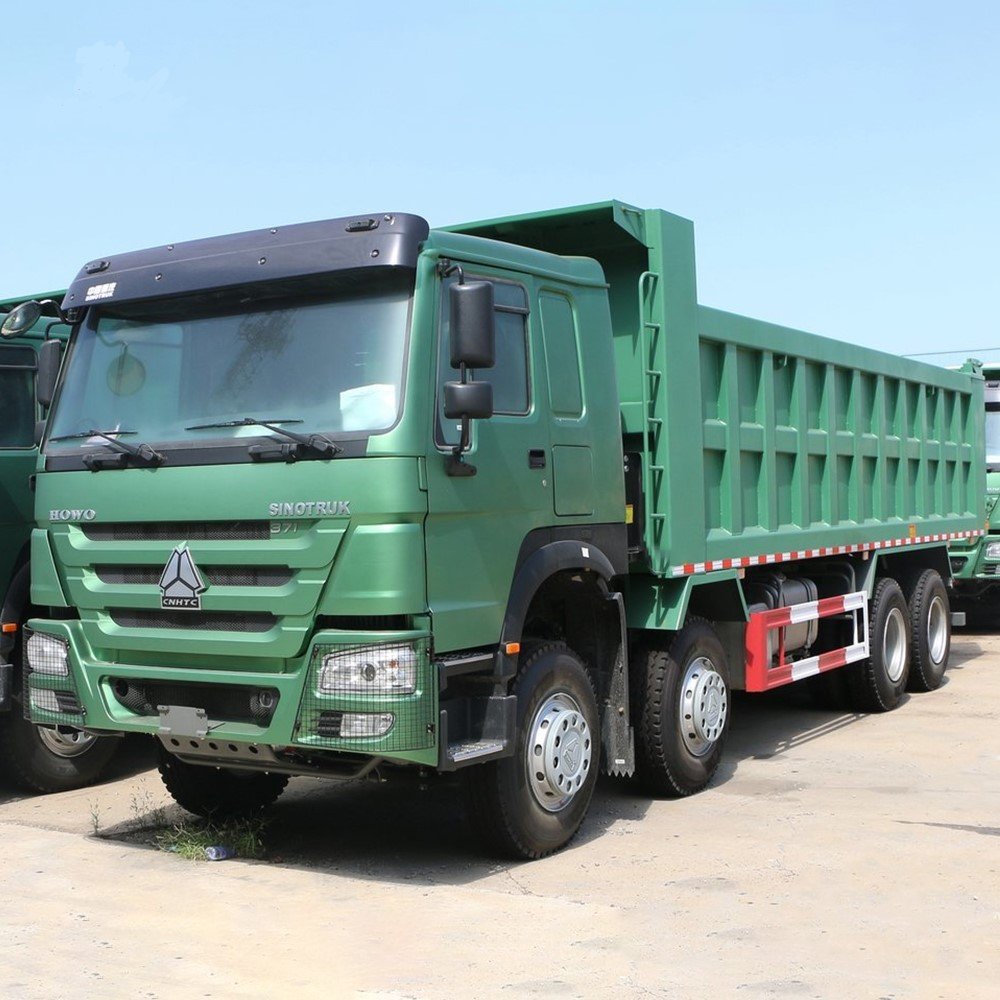
The 8×4 unit (four axles, four driven or two driven sets) is mandatory for extreme off-road, quarry, and mining applications.
Frame Reinforcement and Hub Reduction Axles: The reinforced chassis supports higher Gross Vehicle Weight (GVW), minimizing frame flex and fatigue failure.
Permissible GVW Impact on Payload: The extra axle distributes weight, allowing for the maximum legal payload without incurring axle-overload penalties—a major risk management factor.
Payload-to-Power Optimization
A common TCO mistake is underpowering a heavy chassis. Engine horsepower and torque curve must perfectly match the intended GVW. An undersized engine strains constantly, leading to:
Increased Engine Wear and Heat: Reducing component lifespan.
Excessive Fuel Consumption: The engine operates outside its optimal efficiency curve.
For example, a 380 HP engine might suffice for a 6×4 unit on flat roads, but a minimum 420 HP engine is non-negotiable for a fully loaded 8×4 operating on steep gradients.
Section 3: Component Reliability: Howo vs. Shacman Comparative Analysis
Both Howo and Shacman utilize world-class components (Weichai engines, Fast Gear transmissions), but their final integration and specific model choices can drastically affect TCO.
Engine Performance & Durability
| Engine Model | Typical HP Range | Reliability Focus | TCO Impact |
| Weichai WP10 | 340-380 HP | Versatile, High Fuel Efficiency | Lower operating cost on highway routes. |
| Weichai WP12/WP13 | 420-550 HP | High Torque, Extreme Durability | Essential for low downtime in mining; higher initial cost is justified by lifespan. |
In-depth review must focus on cooling system design. Engine longevity in high-temperature markets (like Africa) depends on oversized radiators and robust coolant circulation, which prevents premature seal and head gasket failure.
Transmission Longevity & Maintenance
Fast Gear transmissions dominate the market. The TCO choice here is Manual vs. AMT/AT.
Manual: Lower IPP and MC (simpler maintenance), but requires highly skilled drivers to prevent clutch wear.
AMT/AT: Higher IPP, but significantly reduces driver error, leading to extended clutch, gearbox, and driveline life, positively impacting TCO over five years.
Axle Technology and Stress Management
Axle load rating is paramount.
13T Axles: Suitable for lighter 6×4 transport.
16T / 20T Axles: Mandatory for 8×4. TCO analysis must account for the cost and frequency of oil changes in heavy-duty axles. Incorrect lubrication practices are a major cause of failure, which can sideline a truck for weeks.

Section 4: Localization & Extreme Condition Engineering
For international buyers, the ability of a truck to handle extreme environments is a direct function of its durability and, thus, its TCO.
Heat and Dust Mitigation Strategies
Operations in African or Middle Eastern deserts present severe TCO risks. Your supplier must confirm:
Reinforced Filtration Systems: Oil bath air filters and multi-stage fuel filtration are mandatory to prevent fine dust from destroying engine internals.
High-Capacity Radiators: Oversized aluminum radiators and optimized fan clutches ensure stable engine temperatures, preventing costly overheating failures.
Engine Compartment Heat Shielding: Protecting sensitive electrical harnesses and rubber components from extreme engine heat and ambient temperature.
High Altitude Operation
In high-altitude markets (e.g., Central Asia, Andes), standard engine mapping causes power loss.
Turbocharger Optimization: Howo and Shacman must use specific turbocharger selections and ECU tuning to compensate for thinner air, ensuring the truck maintains torque and doesn’t struggle, which would spike fuel consumption.
Chassis and Suspension Reinforcement
Off-road durability is built into the frame:
Thickened Frame Rails: Double-layered (or triple-layered) chassis rails are essential for resisting bending and twisting in unpaved quarry conditions.
Heavy-Duty Suspension: Multi-leaf springs with increased thickness and robust stabilizers prevent spring breakage and maintain chassis stability, lowering suspension maintenance costs.
Section 5: Mitigation and Maximizing Resale Value
The largest TCO variable you can control is the maintenance of the asset, which directly influences its Resale Value (RV).
Preventive Maintenance Schedule (PMA) Checklist
Following a strict PMA is critical.
5,000 km: Oil and filter check, general fluid levels.
10,000 km: Detailed brake inspection, axle breather check, suspension fasteners.
20,000 km: Transmission and differential oil change, air dryer filter replacement, critical component inspection.
Predicting and Maximizing Resale Value (RV)
A high RV lowers the effective TCO. Factors that guarantee a higher RV include:
Detailed Service Records: A complete, documented maintenance history is the best guarantee for a buyer.
Genuine Parts Usage: Using authorized spare parts maintains component quality and warranty integrity.
Brand Perception: Howo and Shacman have high brand recognition, ensuring a strong demand in the secondary market.
Conclusion: The Path to Optimized Fleet Investment
The choice between a Howo and a Shacman, and between a 6×4 and an 8×4, is not a simple comparison of price tags. It is a complex financial modeling exercise built on durability, operational metrics, and component longevity. Mastering the Heavy-Duty Dump Truck TCO model is the difference between achieving project profitability and suffering continuous, costly interruptions.
But how certain are you that your current fleet configuration is truly maximized for ROI and operational safety?
Ready to stop guessing and start calculating? Contact our TCO specialists today for a personalized financial assessment and a competitive quote on your next Howo or Shacman fleet.