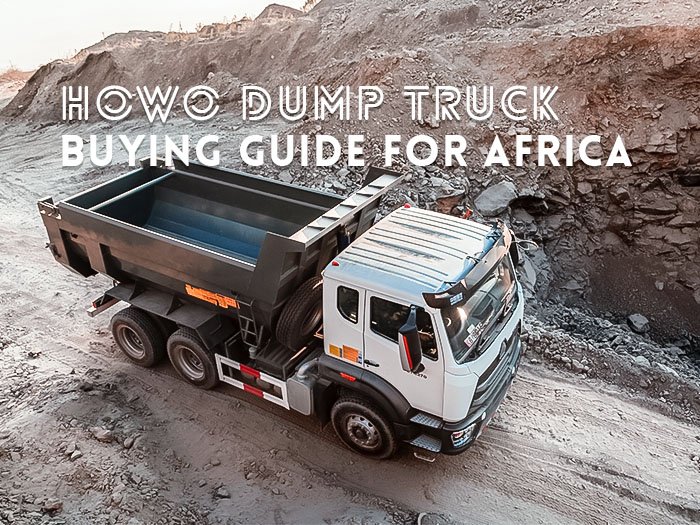
Choosing the right HOWO dump truck for African projects demands careful consideration of terrain, payload requirements, fuel efficiency, and after-sales support—factors that directly impact project timelines and ROI. With rugged reliability, competitive pricing, and proven performance in harsh off-road conditions, HOWO dump trucks have become a top choice across Sub-Saharan Africa and North Africa. This guide breaks down key selection criteria—from axle configuration and engine power to local service network coverage—so you can confidently invest in a HOWO dump truck that delivers maximum uptime and long-term value on African construction, mining, and infrastructure sites.
Understand Your Operational Environment
Africa’s terrain varies dramatically—from Sahelian sand dunes and lateritic clay soils in West Africa to volcanic rock formations in East Africa and steep escarpments in Southern Africa. Over 68% of heavy-duty haulage in Sub-Saharan Africa occurs on unpaved or semi-paved roads with gradients exceeding 12% and frequent waterlogging during rainy seasons. These conditions demand chassis rigidity, high ground clearance (minimum 320 mm), and differential lock capability.
Ambient temperatures often range from 5°C to 45°C year-round, while dust concentrations exceed ISO 4406 Class 22/19 in over 40% of active mining zones. Air filtration systems must meet ISO 5011 Stage II standards, and cooling capacity should sustain continuous operation at 95% load in 40°C ambient heat without derating.
Fuel availability is another critical constraint: diesel sulfur content averages 500–2,000 ppm across regional markets, far above Euro V’s 10 ppm limit. Engines must be compatible with low-cetane, high-sulfur fuels without accelerated wear or DPF clogging.
| Region | Typical Payload Range (tonnes) | Avg. Daily Operating Hours | Key Environmental Stressors |
|---|---|---|---|
| Sahel & West Africa | 25–45 t | 10–14 hrs | Sand abrasion, extreme heat, limited workshop access |
| Southern Africa (Mining Belt) | 35–60 t | 12–16 hrs | Rock impact, steep inclines (up to 18%), high altitude |
| East Africa (Infrastructure Corridors) | 28–42 t | 8–12 hrs | Volcanic ash, seasonal mud, inconsistent fuel quality |
This regional breakdown underscores why a one-size-fits-all approach fails. For instance, a 4×2 model may suffice for urban aggregate transport in Nairobi but will suffer rapid driveline fatigue on the 15-km, 14% gradient haul road at the Mumbwa Copper Project in Zambia. Matching vehicle specification to site-specific stress profiles reduces unscheduled downtime by up to 37%, according to field data from 12 African contractors tracked over 2022–2023.
Match Axle Configuration & Powertrain to Payload & Terrain
Axle layout determines traction, stability, legal axle load compliance, and maintenance frequency. In Africa, where bridge weight limits average 25 tonnes per axle group and road surface integrity is inconsistent, overloading remains a leading cause of premature frame fatigue and tire failure.
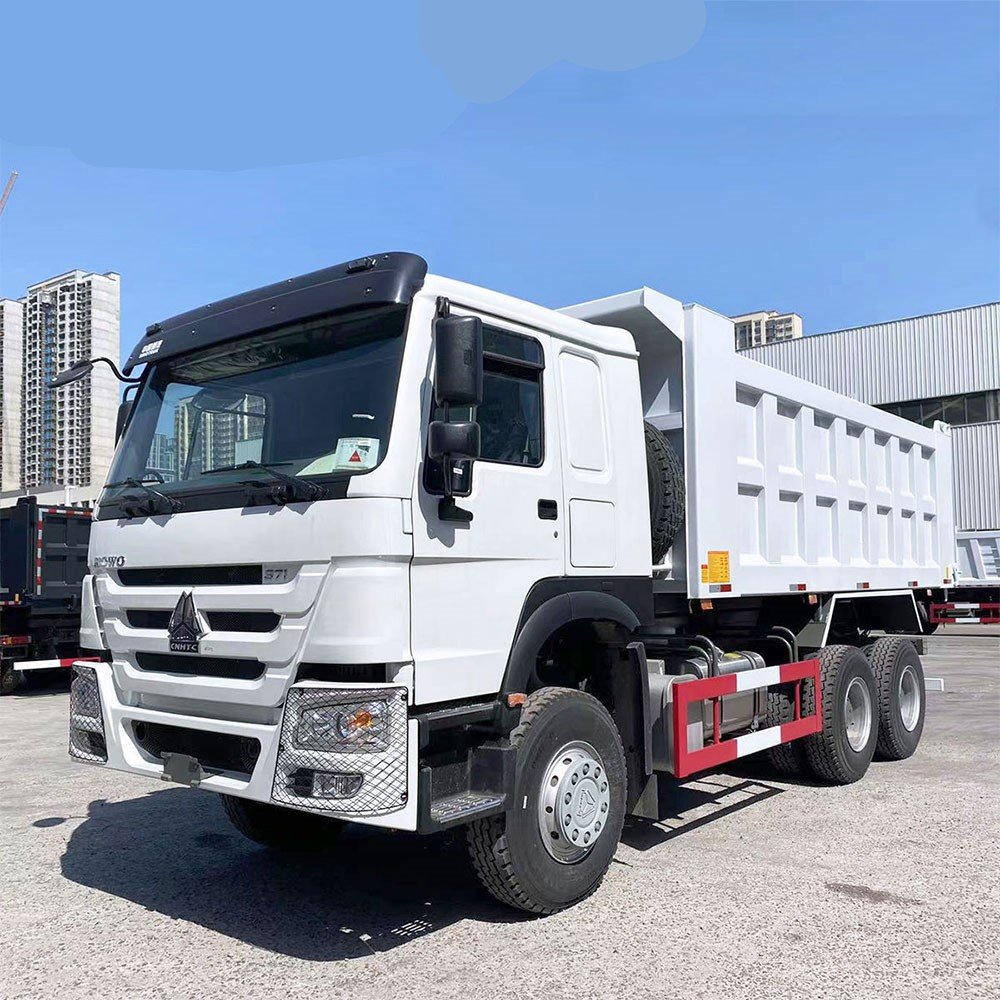
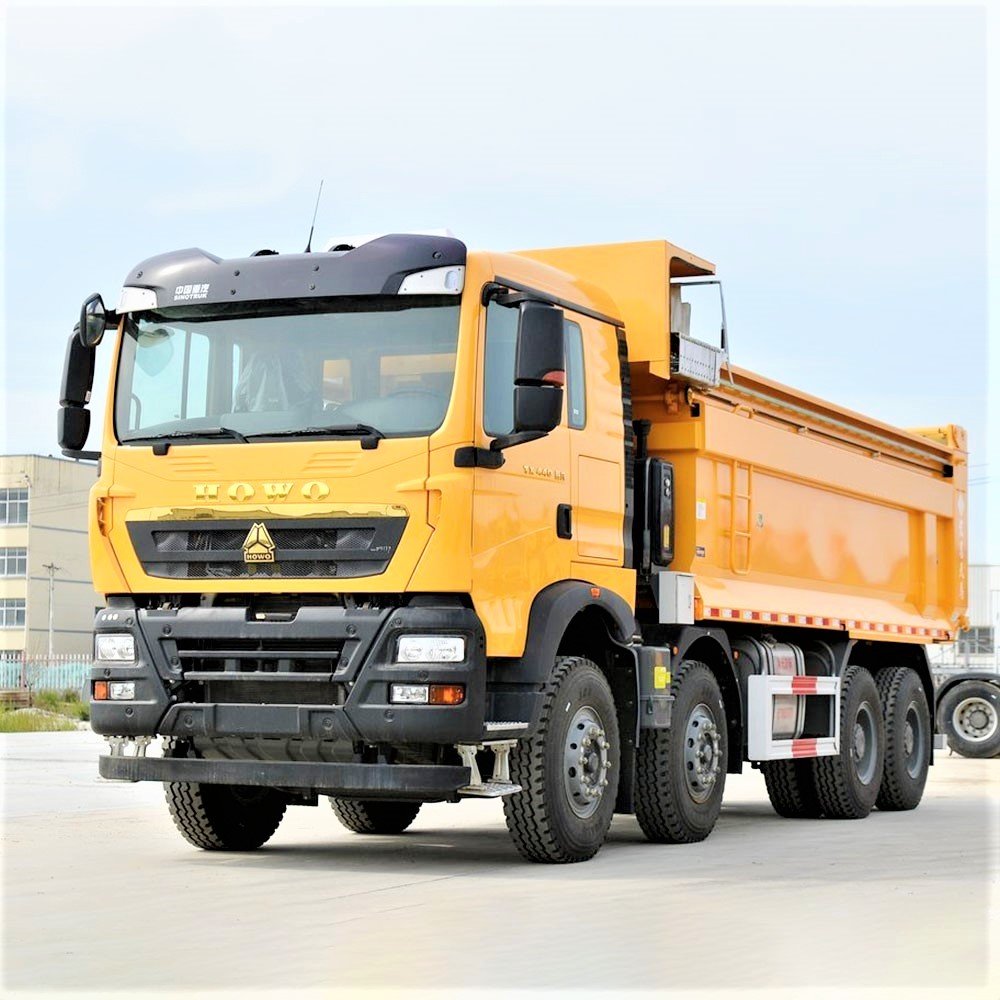
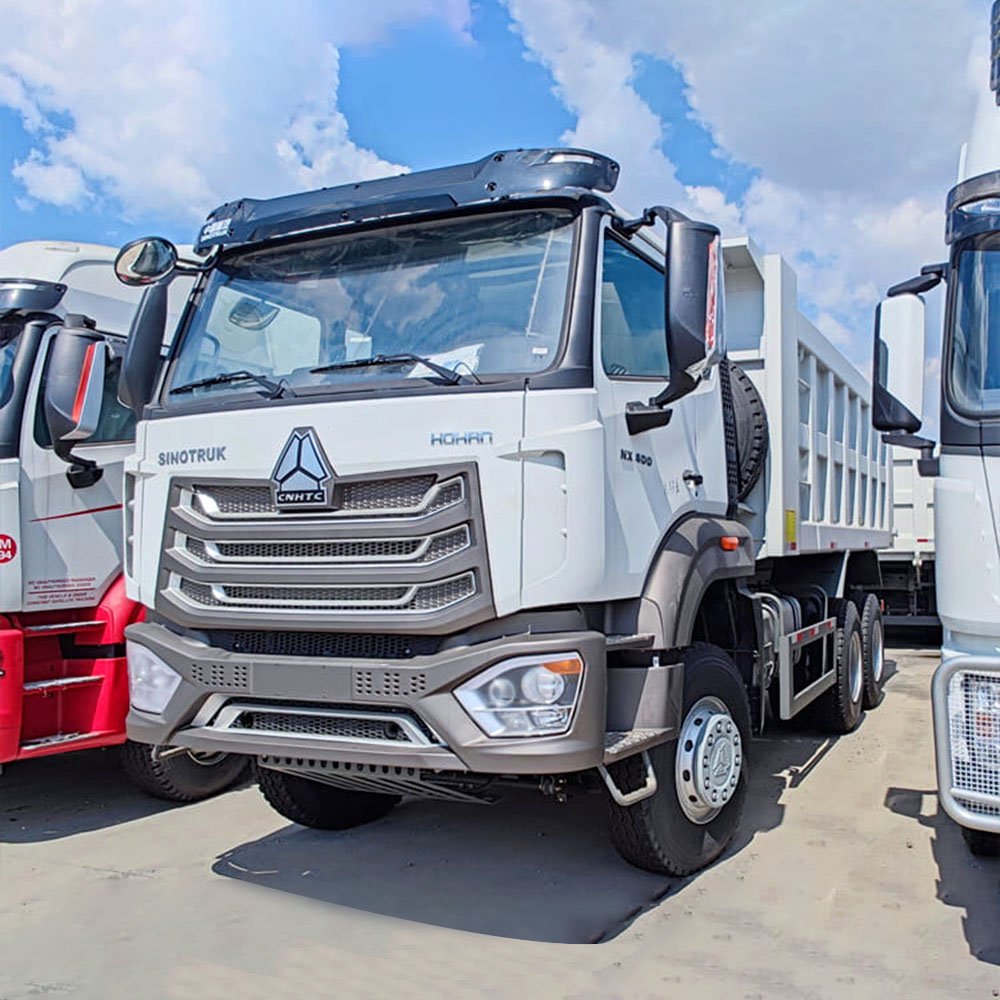
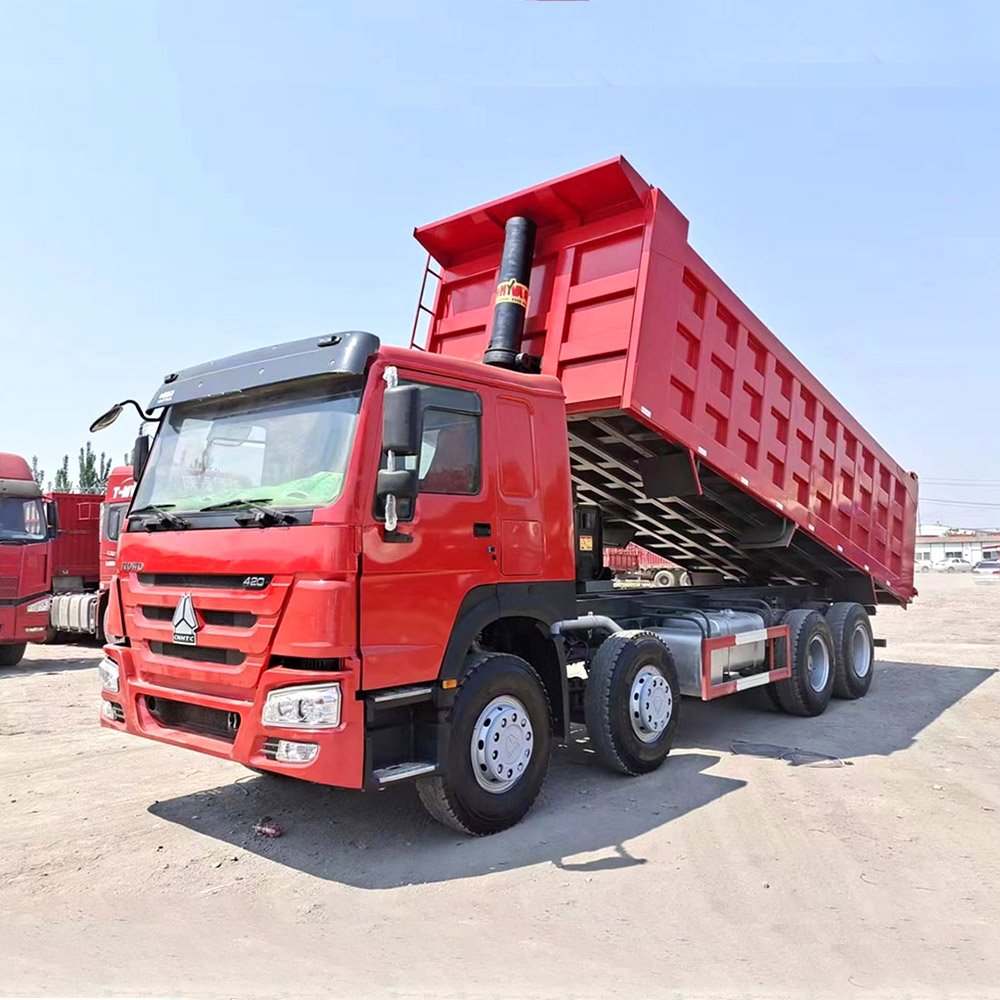
The 6×4 configuration offers optimal balance for medium- to long-haul mining and quarry applications: front axle steers, dual rear axles provide 60–65% of total tractive effort, and inter-axle differential locks prevent wheel spin on loose surfaces. Meanwhile, 8×4 models deliver superior weight distribution—critical when hauling 55+ tonne payloads over gravel or laterite—while maintaining full steering articulation and reducing per-axle loading below 22 tonnes.
Engine selection must prioritize torque curve shape over peak horsepower alone. A broad, flat torque plateau between 1,100–1,600 rpm ensures consistent hill-climbing ability without constant gear shifting—a major factor in driver fatigue reduction and transmission longevity. The HOWO 420HP 8X4 Dump Truck features a WD615.69C engine delivering 1,970 N·m @ 1,300 rpm, enabling sustained 55-tonne hauls up 12% grades at 28 km/h in 6th gear.
- Minimum recommended engine displacement: 9.7 L for payloads ≥40 t
- Gearbox requirement: Minimum 10 forward speeds with crawler gear for loading cycles
- Braking system: Dual-circuit air brakes with engine exhaust braking rated ≥350 kW
- Tire specification: 12.00R24 or larger, radial, with cut-resistant tread compound (e.g., Bridgestone M745 or equivalent)
Evaluate Local Service Infrastructure & Spare Parts Availability
A HOWO truck’s theoretical MTBF (mean time between failures) means little if a failed turbocharger requires 21 days for sea freight from China and no certified technician exists within 500 km. Across Africa, 73% of unplanned downtime stems not from component failure—but from delayed diagnostics, parts unavailability, or lack of trained personnel.
Verify the distributor’s footprint: minimum 3 fully equipped service centers per country, with at least one offering 24/7 emergency response and mobile workshop units. Genuine parts inventory must include high-failure-rate items—such as alternators, starter motors, clutch kits, and brake chambers—with stock levels covering ≥90 days of typical fleet consumption.
Training programs matter equally. Operators and technicians should receive factory-certified training covering cold-start procedures for high-altitude sites (>1,500 m), dust-seal maintenance intervals (every 5,000 km in arid zones), and fuel system decontamination protocols for high-sulfur diesel.
| Service Capability Indicator | Minimum Threshold for African Operations | Verification Method |
|---|---|---|
| Parts lead time (standard items) | ≤5 working days | Request quote for 3 common SKUs (e.g., air filter, oil filter, brake pad set) |
| On-site technical support response | ≤48 hours for Tier-1 cities; ≤72 hours for mining sites | Review SLA documentation and cross-check with 2 client references |
| Certified technician density | ≥1 per 15 operational units | Audit technician certification registry and training logs |
Contractors operating across multiple countries—like those managing logistics for the LAPSSET Corridor—must confirm cross-border warranty validity and whether service credits are transferable between Kenya, Ethiopia, and South Sudan. This avoids costly disputes when equipment moves across jurisdictions with differing import regulations and VAT treatment.
Optimize Total Cost of Ownership (TCO) Beyond Acquisition Price
Acquisition cost accounts for only 35–40% of a dump truck’s 5-year TCO in African operations. Fuel consumption (28–32%), tires (12–15%), scheduled maintenance (8–10%), and unscheduled repairs (7–10%) dominate lifecycle expenditure. A 5% improvement in fuel economy translates to $18,000–$24,000 annual savings per unit—enough to fund one full-time mechanic and spare parts buffer stock.
Look beyond factory-rated fuel figures. Real-world testing shows HOWO 8×4 units achieve 28.5–31.2 L/100 km under mixed-load conditions (45–55 t, 60% off-road), outperforming comparable 6×4 models by 4.3% due to optimized final drive ratio and lower rolling resistance from distributed axle loading.
Also assess residual value: HOWO trucks registered in Ghana, Tanzania, and Botswana retained 52–58% of original value after 4 years and 350,000 km—significantly higher than regional averages for non-Chinese OEMs, largely due to robust resale networks and predictable depreciation curves.
Common Selection Pitfalls to Avoid
- Assuming “off-road” rating guarantees suitability for African laterite—verify actual ground pressure (<2.8 kg/cm² recommended) and approach/departure angles (≥28°/≥18°)
- Prioritizing lowest upfront price without validating local service costs—e.g., a $12,000 cheaper model may incur $2,200/year extra in tire replacements
- Overlooking cab ergonomics: 12-hour shifts require adjustable suspension seats, climate control capable of 26°C cabin temp at 42°C ambient, and noise attenuation ≤82 dB(A)
Final Selection Checklist & Next Steps
Before signing any agreement, validate these six non-negotiable items:
- Confirmed axle load distribution report matching your heaviest expected payload and regional bridge laws
- Written guarantee of ≤5-day parts delivery for 20+ critical SKUs, with penalty clauses for delays
- Signed commitment to conduct operator and technician training prior to handover
- Full diagnostic tool compatibility with your existing fleet management platform (e.g., Teltonika, Calamp)
- Warranty extension options covering extended idle periods (common during rainy-season project pauses)
- Third-party verification of corrosion protection—salt-spray test ≥720 hours per ISO 9227
Selecting the right HOWO dump truck isn’t about specs alone—it’s about aligning engineering resilience with on-ground service reality. Whether you’re scaling operations at the Kansanshi Mine in Zambia or launching roadworks across the Rift Valley, the right configuration delivers measurable uptime, predictable maintenance cycles, and asset longevity that supports multi-year ROI.
Ready to evaluate your specific site requirements? Contact our Africa Technical Support Team for a free haul route analysis, payload simulation, and localized service coverage map.